

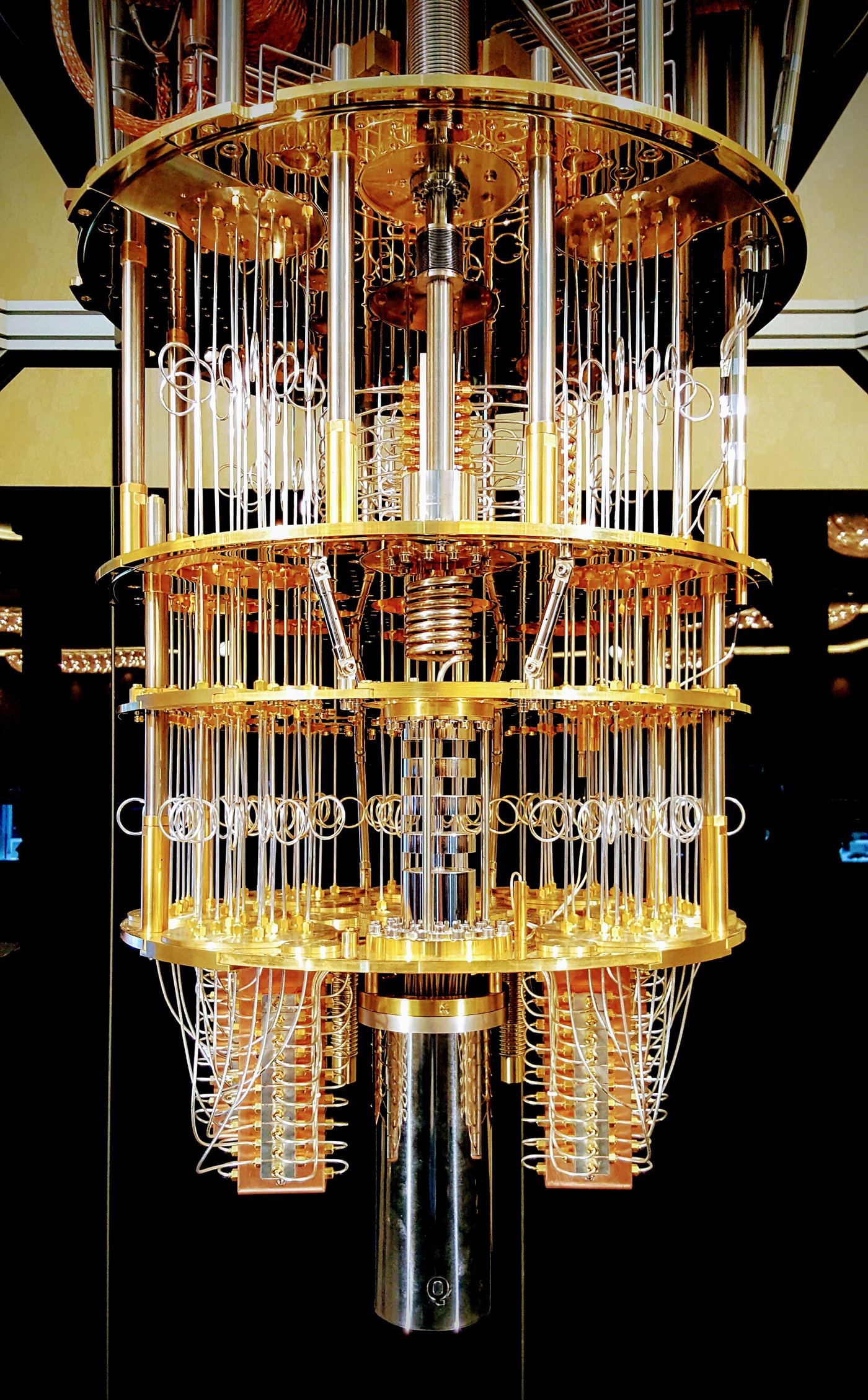
For thirty years, quantum computing has lived in the future tense — always a decade from usefulness, always one breakthrough from practicality. The tone in the laboratories has changed. The machines are still exotic, still fragile, still cooled to temperatures colder than deep space. But the field’s hardest problem, error correction, has begun to yield, and with it the conversation has shifted from whether quantum computers will do useful work to which work they will do first.
The error problem, in plain terms
Qubits, the quantum counterparts of bits, are exquisitely sensitive. Heat, vibration and stray electromagnetic fields all corrupt their calculations, and for years every increase in machine size brought errors that grew faster than the answers. Error correction — spreading one logical qubit across many physical ones so mistakes can be caught and fixed — is the discipline that changes that equation. The National Institute of Standards and Technology has been preparing for the consequences on the security side, finalising post-quantum cryptography standards designed to survive the day a large machine turns its attention to today’s encryption.
Where useful work appears first
The earliest valuable problems are widely expected to be quantum in nature themselves: simulating molecules for drug discovery and materials science, where classical computers must approximate what a quantum system does natively. Research published through journals such as Nature shows steady progress in these simulations, alongside more contested claims in optimisation and machine learning. Our Blog coverage separates the verified milestones from the marketing.
Patience, instrumented
None of this makes quantum computers general-purpose replacements for the classical machines that run the world, and the honest researchers say so. What is arriving is a specialist instrument — extraordinarily powerful for a narrow class of problems, useless for the rest. The future tense is not over, but for the first time it has a schedule attached.
The money tells its own story. Governments have committed tens of billions to national quantum programmes, treating the technology the way earlier generations treated semiconductors — as infrastructure a country cannot afford to import from a rival. University pipelines have followed the funding: quantum engineering, once a specialism inside physics departments, is becoming a degree in its own right, and the field’s bottleneck has shifted visibly from ideas to people — cryogenics engineers, control-electronics specialists, error-correction theorists.
Scepticism remains a healthy part of the ecosystem. Every vendor claim is now interrogated by independent teams, and several breathless announcements have been quietly revised downward under that scrutiny. That is what a maturing field looks like: fewer miracles, more measurements.
For everyone outside the laboratory, the actionable item is cryptographic, not computational. Organisations holding data that must stay secret for decades are being advised to inventory their encryption now and migrate on a schedule, because an adversary can record encrypted traffic today and decrypt it with tomorrow’s machine. The quantum era will not arrive with a bang. For the prepared, it has already started with a spreadsheet.