

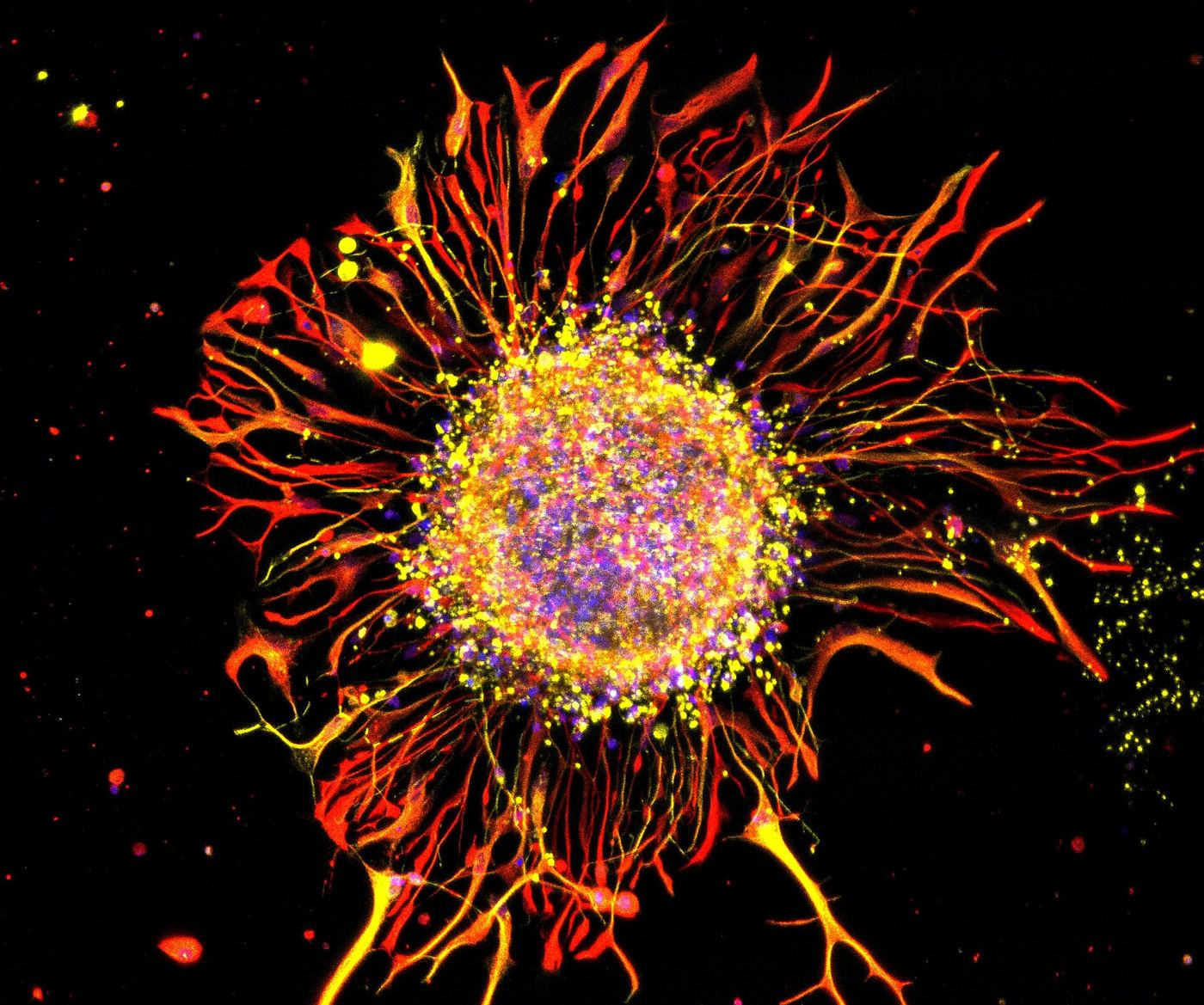
Scientists have identified a rare brain cell type that carries a strong concentration of genetic risk for schizophrenia and bipolar disorder, according to a study published in Cell on November 12. An international team led by researchers at the Allen Institute built a cross-species atlas of the basal ganglia, analysing 1.8 million nuclei from human, macaque and marmoset brains with single-cell sequencing, chromatin profiling, spatial transcriptomics and electrical recording. They found a distinct group of spiny projection neurons, named STR D2 SMYD2-HTR7, that makes up only about 1 percent of neurons in the region, far below the roughly 90 percent share of ordinary spiny projection neurons. Known schizophrenia risk variants clustered in genes expressed by this rare cell type.
What the Evidence Shows
The newly described neurons carry a distinctive molecular fingerprint, including the SMYD2 gene and receptors for both dopamine and serotonin, including the 5-HT7 receptor. Their electrical recordings showed much higher excitability than other projection subtypes, and unlike many cell types they are scattered throughout the region rather than organised in clusters. The dopamine D2 receptor carried by these cells is the target of most antipsychotic drugs, which block it to reduce hallucinations and delusions. The authors stress that the work shows an association, not a cause, but the cells now offer a precise target for studying how genetic risk shapes schizophrenia and bipolar disorder. The wider atlas mapped 25.5 million cells across 26 studies, identifying 61 conserved cell types shared over 76 million years of evolution. Reporting and analysis from sources such as Nature Human Behaviour track the same developments, and specialists following the rare brain cell linked to schizophrenia risk say the direction is now consistent across independent lines of evidence.
The Wider Context
The wider context is a discipline rebuilding confidence through replication and pre-registration, and findings on the rare brain cell linked to schizophrenia risk are being reported with their effect sizes and limits attached. That honesty can make results sound smaller than the headlines of a decade ago, but the effects that survive are the ones practitioners can responsibly build on.
What Happens Next
What happens next in research on the rare brain cell linked to schizophrenia risk is a turn toward real-world trials: longer, larger and conducted in the schools, workplaces and clinics where the findings are meant to apply. Psychologists are also studying individual differences more seriously, because average effects conceal the people for whom an approach works powerfully and those it leaves cold. Both shifts make the science slower and more useful. You can follow related developments in our coverage of psychology.
None of this will be settled by a single announcement, study or product launch. The pattern to watch is accumulation: independent confirmations, honest reporting of failures and steady improvement in the underlying numbers. Readers who follow those signals, rather than the loudest claim of the week, will understand this subject better than most of the commentary surrounding it suggests is possible.